
4. Butterfly Garden Decorations
Advertisements
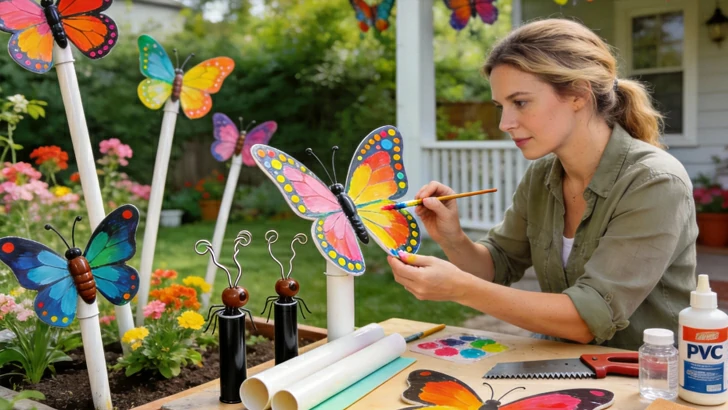
Create a flock of colorful butterflies to stake in your flower beds or hang from a porch. This project emphasizes painting and pattern creation.
1. Materials and Tools Needed
Prepare: 1/2-inch PVC pipe for stakes, PVC sheets or the flat sides of large-diameter pipes, a jigsaw or coping saw, sandpaper, acrylic paints in bright colors, clear outdoor sealant, strong wire or pipe for antennae, and PVC cement.
2. Cutting and Shaping the Wings
Draw or trace a butterfly wing pattern onto the PVC sheet. Carefully cut out two identical wing sets using a saw. Sand all edges until smooth. For a 3D effect, you can gently heat the wings with a heat gun and curve them slightly before they cool.
3. Painting and Assembly
Paint the wings with a base color. Once dry, add detailed patterns, dots, and borders with contrasting colors. Cut a short piece of small-diameter pipe for the body and paint it black or brown. Cement the wings to either side of the body. Attach a long, straight pipe as a stake to the bottom. Twist thin wire into antennae and glue them to the head. Seal everything with a clear coat to protect from weather.
5. The Classic PVC Pipe Duck
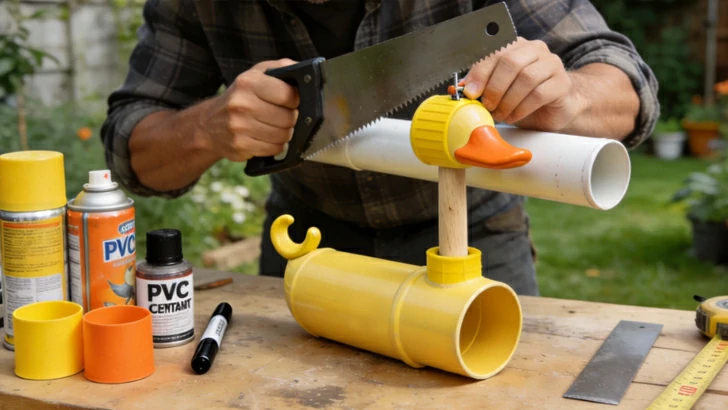
A simple and cheerful duck figure is a classic PVC project. This design uses basic cuts and assembly to form a recognizable silhouette.
1. Materials and Tools Needed
Collect: 2-inch diameter PVC pipe (about 2 feet), a PVC end cap of the same diameter, a hacksaw, file, yellow and orange spray paint, black marker, PVC cement, and a wooden dowel or small pipe for the neck.
2. Creating the Duck's Body
The body is made from a short section of the large pipe. Cut a piece approximately 8 inches long. Take the end cap—this will be the duck's head. To create the beak, make a single straight cut about 1.5 inches deep into the rim of the end cap, then cut out a small wedge from that slit and sand it into a rounded beak shape.
3. Final Assembly and Detailing
Cement the end cap (head) to one end of the wooden dowel. Cement the other end of the dowel to the inside top edge of the body pipe, creating the neck. For a tail, cut a small curved piece from leftover pipe and cement it to the rear. Paint the entire body and head bright yellow. Paint the beak orange. Once dry, use a black permanent marker to draw a friendly eye on each side of the head.

Essential Tips for Working with PVC Pipe
Before you begin your creations, mastering a few core techniques will ensure better results and safety.
1. Cutting and Sanding
Always use a sharp PVC cutter or fine-tooth hacksaw for clean cuts. Secure the pipe before cutting. After cutting, use a file or sandpaper to thoroughly remove all burrs and sharp edges, which is crucial for safety, especially if children will be near the finished product.
2. Bending with Heat
A heat gun is essential for creating curves. Apply heat evenly to a section of pipe, rotating constantly. When the PVC becomes pliable (not melting), put on heavy gloves and bend it to the desired shape. Hold it in position until it cools and hardens. Practice on scrap pieces first.
3. Painting for Durability
PVC is non-porous, so paint adhesion can be tricky. Lightly sand the surface with fine-grit sandpaper to create a "tooth." Wipe away dust and apply a plastic primer or spray paint specifically formulated for plastics. Apply several light coats instead of one heavy one to prevent drips and ensure longevity, especially for outdoor pieces.
Conclusion
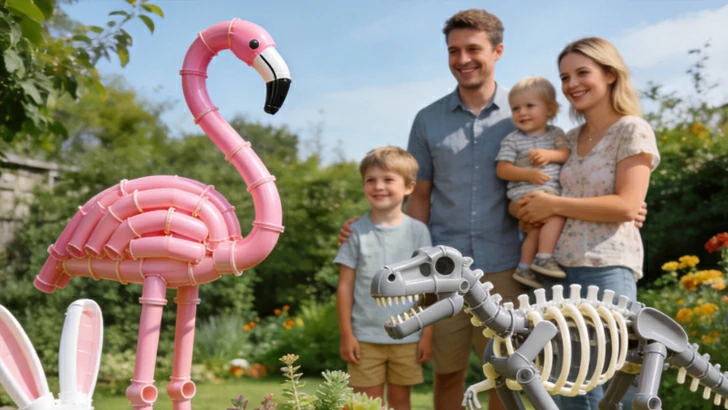
Transforming simple PVC pipes into delightful birds, animals, and sculptures is a testament to the power of imagination and practical skill. The projects outlined—from the graceful flamingo to the cheerful duck—demonstrate a range of techniques from simple assembly to heat-forming and detailed painting. This hobby not only yields unique decorative pieces but also promotes problem-solving and resourcefulness. With your newfound knowledge of cutting, bending, assembling, and finishing PVC, you are now equipped to tackle these projects and invent your own unique creations. So gather your materials, embrace the process, and start building your PVC pipe zoo today.
Advertisements
Advertisements
You May Have Missed
This Elegant Country Cottage is Movable! Let’s Find out What’s Inside...
40 Breathtakingly Perfect Time-Lapse Photos